|
Welcome to our regular newsletter. Read on to find out what has been happening and what is coming up with the AI Standards Hub. |
| |
 |
|
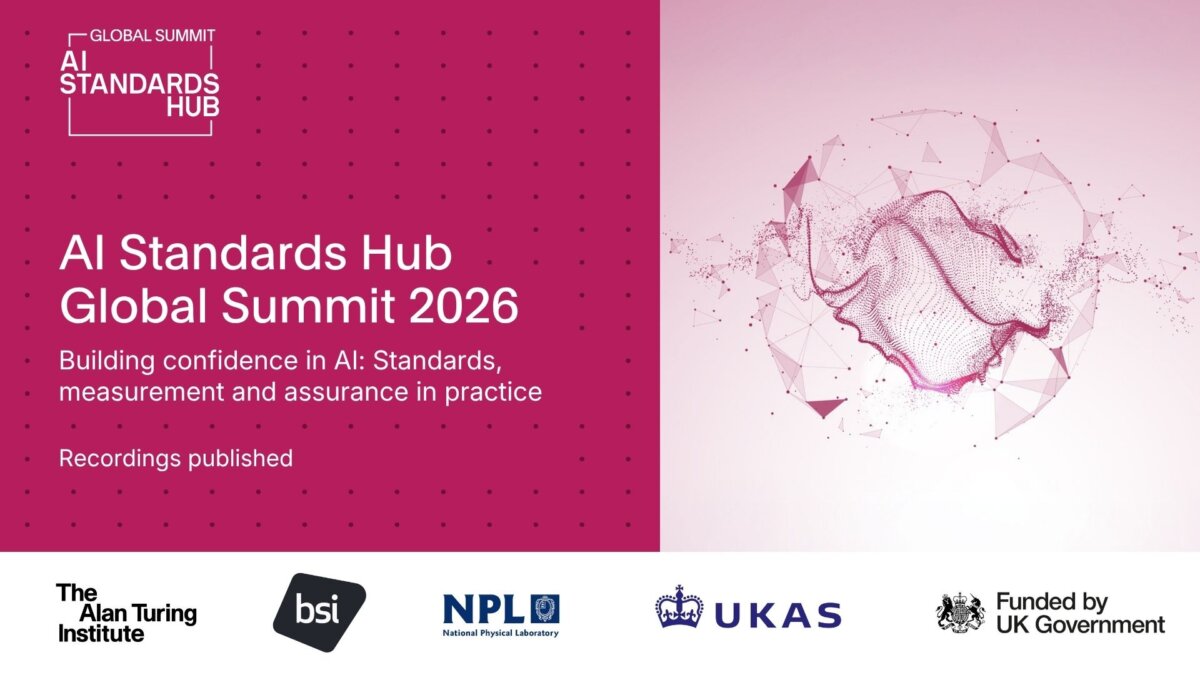
AI Standards Hub Global Summit: Recordings available |
|
We are pleased to share that video recordings of our Global Summit 2026 are now available to watch on our website. Held in Glasgow during March, the Summit brought together expert perspectives from standards development bodies, measurement institutes, national governments, intergovernmental organisations, the AI research community, industry, and civil society to advance efforts around AI standards-making, measurement, and assurance as key foundations to build confidence in AI systems.
The recordings span a combination of keynote speeches, expert panels, and interactive sessions designed to advance alignment, knowledge-sharing, and collaboration among key stakeholder groups and decision-makers in pursuit of robust, equitable, and coordinated approaches to AI standards, measurement, and assurance.
Published in the form of two playlists, the recordings provide the opportunity to watch individual sessions or the programme of each day in full.
|
|
|
| |
 |
|
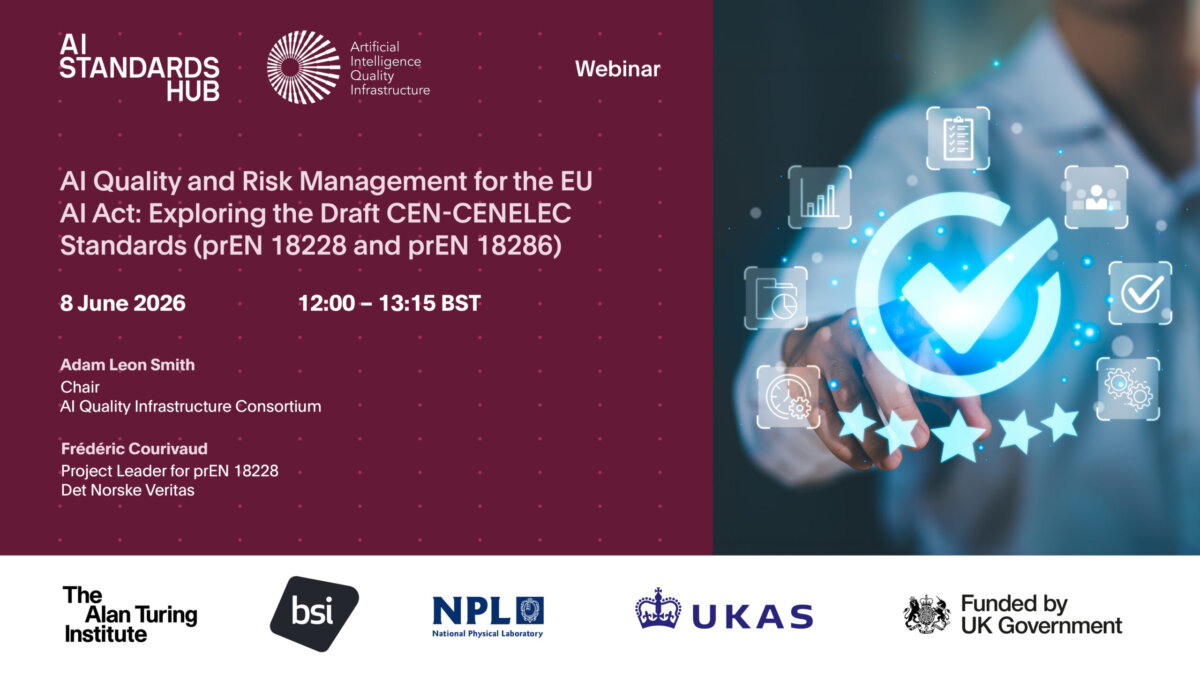
Upcoming event: AI Quality and Risk Management for the EU AI Act - Exploring the Draft CEN-CENELEC Standards |
|
The AIQI (AI Quality Infrastructure) Consortium is supporting the development of practical standards to help organisations navigate the evolving AI regulatory landscape.
This AIQI webinar will introduce these emerging standards and explore their relevance for AI assurance, conformity assessment and regulatory compliance. The session will examine the role of CEN-CENELEC standards in supporting implementation of the EU AI Act, as well as the relationship between AI risk management and quality management systems.
|
|
|
| |
 |
|
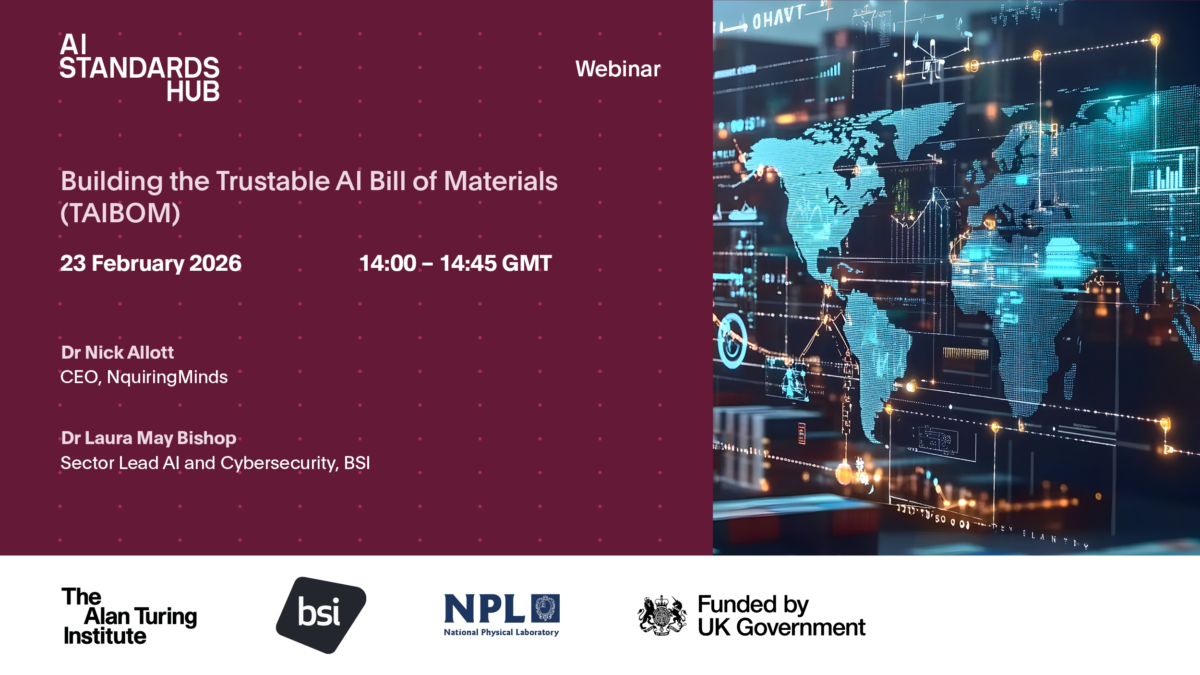
Recording: Building the Trustable AI Bill of Materials (TAIBOM) |
|
You can now watch the recording of our webinar introducing the Trustable AI Bill of Materials (TAIBOM), a new framework for describing, documenting, and managing AI systems across their full lifecycle and supply chains. Featuring a presentation and Q&A, the session explores how TAIBOM supports transparency, accountability, and security in AI, as well as its alignment with emerging UK and international standards and governance efforts.
|
|
|
| |
 |
|
New paper: Call for dynamic regulation of our oceans to reduce whale strikes |
|
A new paper warns that traditional marine protected zones are an inefficient way to prevent shipping strikes on marine animals and a more flexible approach is needed to account for changing migration patterns and climate change.
The paper was submitted to the International Maritime Organisation’s (IMO) Marine Environment Protection Committee by the Royal Institute of Navel Architects on behalf of the Sustainability Mission at the Alan Turing Institute, supported by colleagues at the Marine Biological Association and the University of Southampton. It urges that static zones should be replaced by more dynamic systems. This would enable the shipping industry to respond to real time data, mitigating the rise in shipping strikes on endangered ocean megafauna, such as whales and whale sharks.
|
|
|
| |
 |
|
New project: Maritime Autonomous Surface Ships (MASS) |
|
The Alan Turing Institute and Lloyd’s Register are partnering on a new project to advance research that could help accelerate the adoption of autonomous shipping by developing strong, reliable standards. The aim of the project is to produce research that will contribute to an open-source systems engineering framework defining the end-to-end development activities relevant to Maritime Autonomous Surface Ships (MASS). By developing clear standards and frameworks, the project seeks to drive the proliferation of autonomous shipping and accelerate its positive impact on safety and sustainability.
|
|
|
| |
|
Sign up for a user account |
|
Creating a user account on the AI Standards Hub website will enable you to take advantage of a wide range of interactive features. Benefits include the ability to save standards and other database items to your personal dashboard, notifications when followed standards open for comment or move from draft to publication, being able to contribute to our community discussion forums, access to our e-learning modules, and much more!
|
|
|
| |
|
Was this newsletter forwarded to you by someone else? Subscribe here to receive future editions directly in your inbox. |
| |
|